Porcini Mushroom Redwork: A Designer’s Real-World Review
First Impressions: Earthy, Simple, and Surprisingly Versatile
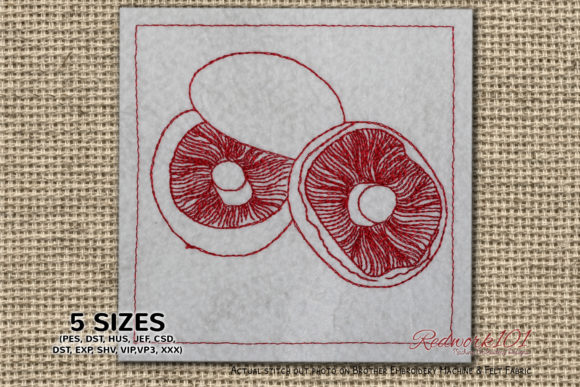
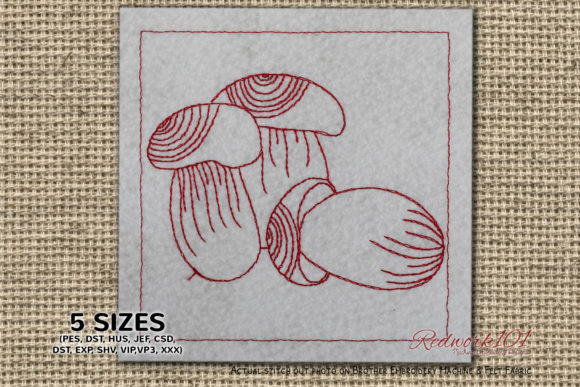
When I opened Porcini Mushroom Redwork, my first thought wasn’t “cute mushroom”—it was “this feels like a quiet moment in the kitchen.” The clean redwork lines evoke hand-drawn charm without fussiness. There’s no heavy fill stitch clutter, no dense satin borders—just confident running and outline stitches that suggest texture, not replicate it. That’s rare in food-themed embroidery files. Most mushroom designs lean into hyper-realism or cartoon whimsy; this one lands somewhere grounded and artisanal—like something you’d find stitched onto a linen tea towel at a farmers’ market stall.
A Real Project Test: Embroidering It on a Linen-Cotton Kitchen Towel
I tested Porcini Mushroom Redwork on a medium-weight, slightly textured linen-cotton blend—the kind many Etsy sellers use for premium kitchen goods. With a light tear-away stabilizer and 40-weight cotton thread (classic red, but also tried charcoal and oat), the design held its shape beautifully. No puckering. No skipped stitches. The outer box—mentioned as optional in the description—was easy to omit entirely. When I did, the mushroom stood alone with breathing room, making it ideal for small-format items like napkin corners or apron pockets. When I kept the box (in a contrasting thread), it read more like a vintage label—perfect for boutique branding or gift-ready packaging.
Where It Shines—and Where to Pause
Porcini Mushroom Redwork excels in projects where subtlety and story matter more than flash:
- Custom apparel: Looks especially strong on natural-fiber sweatshirts and relaxed-fit tees—no competing graphics needed. The redwork style reads clearly even at 3.5" wide.
- Embroidered patches: Clean outlines mean sharp edges after cutting and sealing. Great for iron-on or sew-on versions on denim jackets or tote bags.
- Baby and nursery items: Gentle shape + neutral color flexibility makes it safe for onesies, burp cloths, or pillow covers—no sharp angles or tiny details that snag or fray.
- Holiday and wedding gifts: Paired with a simple monogram or date, it adds warmth to kitchen linens or custom aprons—think “handmade by [Name]” for a chef friend’s birthday.
But be thoughtful on:
- Stretchy fabrics: Not inherently unstable, but avoid tight curves (like baseball caps) unless you double-stabilize. The design’s open layout doesn’t anchor well on high-movement seams.
- Dark or heavily textured backgrounds: Redwork relies on contrast. On black terry cloth or nubby burlap, test thread visibility first—charcoal or cream may read better than traditional red.
- Tiny hoops (<3"): The stem and cap have enough definition to scale down, but skip the optional box if hooping under 3". Details stay legible, but density drops off cleanly—no fuzzy edges.
What It Does for Your Craft Business
This isn’t just another food-themed embroidery file—it’s a quiet value-builder. Customers notice when stitching feels intentional, not algorithmic. Porcini Mushroom Redwork reads as handmade, even when machine-embroidered, because the line weight and spacing honor traditional redwork rhythm. That builds trust: buyers assume care went into the whole process—not just the final stitch.
For Etsy sellers and small shop owners, it’s a flexible asset. Use it solo on a tea towel listing (“Mushroom Linen Towel – Hand-Embroidered Style”) or layer it into a seasonal bundle (“Forest Foraging Collection” with ferns and acorns). It photographs well in natural light, scales nicely in printable mockups, and pairs effortlessly with earth-toned packaging. No need to over-explain—its calm clarity does the work.
Designer Notes You’ll Actually Use
Before stitching your first client piece or batch-producing for craft fairs, here’s what I recommend:
- Test on scrap fabric first—especially if using textured or dark substrates. Redwork can vanish on low-contrast surfaces.
- Check thread color contrast in both daylight and indoor lighting. What reads warm on screen may look muddy under kitchen LEDs.
- Review stitch density: This design avoids heavy fill areas, so it’s gentle on machines and fabric—but still confirm no overlapping runs in tight corners.
- Confirm hoop size compatibility before digitizing for commercial work. If your standard cap hoop is 4"x4", verify placement won’t clip the cap curve.
- Inspect small details at 200% zoom: the gills are suggested, not rendered—so they’re forgiving on lower-DPI machines or older embroidery software.
- Try black-and-white mockups to assess silhouette strength. A good redwork design should hold up without color crutches.
- Use proper stabilizer: Light cutaway for knits, tear-away for stable wovens. Skip fusible web unless backing fabric is ultra-slippery.
- Verify licensing before selling finished items or bundling the digital embroidery file. Since the description notes the box is optional and colors are flexible, it likely permits commercial use—but always double-check.
Final Thought: Less Is More—Especially With Mushrooms
Porcini Mushroom Redwork doesn’t try to be everything. It’s not a statement sleeve design. It’s not meant for stadium banners or logo-heavy merch. It’s the quiet detail that makes a handmade product feel considered—a single mushroom, stitched just right, on a towel you reach for every morning. For designers, crafters, and small business owners who value intention over intensity, it’s a reliable, repeatable, quietly memorable embroidery file. Use it where attention spans are short and authenticity matters most: on things people touch, use, and keep.